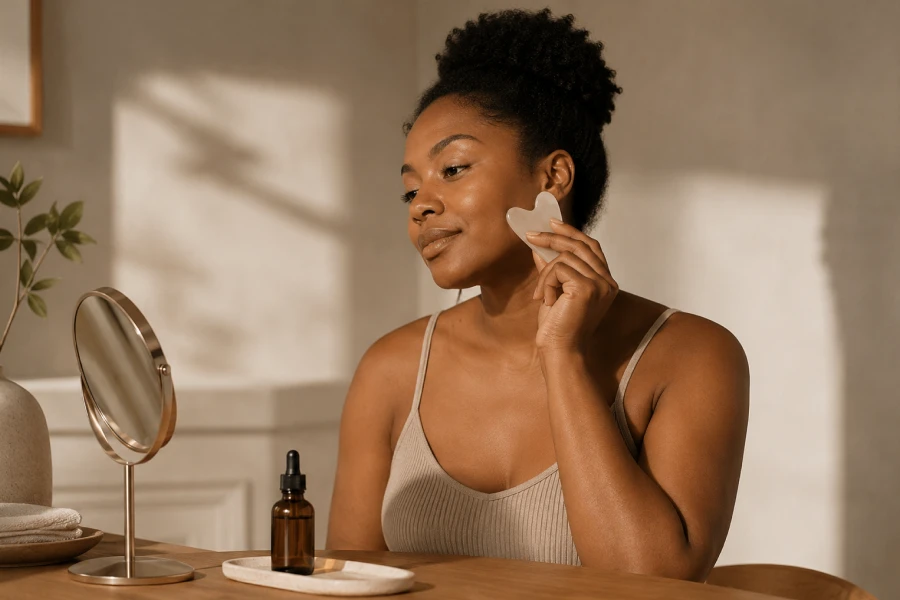
A gua sha routine for beginners does not need a crowded bathroom shelf or a long list of rules. It needs a clean tool, a little slip, and a few minutes of attention. Starting simply removes the urge to copy every technique you see online. It also gives your skin time to adjust to a new habit. The first goal is learning how light pressure feels. The second is building a rhythm you actually enjoy. A short session can be enough to make the practice feel calming. With time, gua sha routine for beginners becomes less about remembering steps and more about trusting a comfortable flow.
Long routines often sound impressive, but they can be hard to maintain. Start with five minutes, two or three times each week. That schedule gives you room to learn without making the process feel demanding. Begin at the neck, continue along the jaw, then move toward the cheeks. Repeat only a few strokes in each area. A face massage tool feels easier to use when the sequence stays familiar. You do not need to treat every part of the face during every session. A shorter routine is often the routine that lasts.
Dry skin and a smooth stone are not a friendly combination. Before beginning, apply a lightweight oil, balm, or serum that works well with your skin. The product should create enough glide that you never need to press hard. If your tool catches, add more product instead of increasing pressure. This small adjustment protects comfort and helps your movements remain slow. A mindful skincare routine also creates time to notice what your skin prefers. Different seasons may call for different textures. Your routine can change without becoming complicated. Flexibility is part of learning.
There is no single perfect stone shape for every person. Some tools feel more natural around the jaw, while others fit the cheek and brow more comfortably. The most useful option is one that feels secure in your hand. Test the curved edges before starting a full session. Hold the stone close to the skin instead of standing it upright. Keep your grip relaxed so your wrist does not tense. A comfortable tool makes the motions easier to repeat. It also makes your routine feel less like a chore. When the tool feels simple, you are more likely to reach for it regularly.
Using the same basic order helps the technique feel familiar. Begin lower on the face and work outward, then move toward the cheeks and brow. This prevents the routine from turning into random motions. It also helps you notice how each area feels from day to day. A jawline sculpting routine can be especially easy to remember because the natural contours guide the motion. Keep each stroke unhurried. Lift the tool and reset rather than dragging it back and forth. Small details like this create a more polished experience.
Online videos can make facial massage look intense, but a strong hand is unnecessary. The skin around your face responds better to patient, comfortable contact. Use enough product, keep the tool nearly flat, and avoid rapid scraping. Your face may look slightly flushed after a session, but discomfort is a sign to stop. A good session should leave you feeling calm rather than sore. Gua sha routine for beginners is about learning sensitivity, not proving commitment. When in doubt, use less pressure. You can always build confidence with repetition. Your comfort remains the most reliable measure.
New routines become easier when they connect to something you already do. Place your tool beside your cleanser, nighttime moisturizer, or morning sunscreen. That visual cue can remove the need to remember. You might use it while waiting for a treatment mask to sit. You might choose three quiet minutes after brushing your teeth. The exact moment matters less than the repetition. A depuffing facial massage habit feels more realistic when it is attached to a familiar cue. Let the routine remain optional on busy days. A flexible habit has more staying power than a strict one.
Pay attention to how your face and skin feel before and after each session. Notice which areas hold tension and which motions feel most relaxing. These observations make the practice more personal. You may eventually prefer morning sessions, evening sessions, or a mix of both. Keep your approach light when trying new movements. There is no rush to master every technique. Gua sha routine for beginners becomes more intuitive through repetition. A simple notebook or mental check-in can help you remember what feels best. The routine is meant to serve you. Let it grow at a comfortable pace.



Leave a comment